
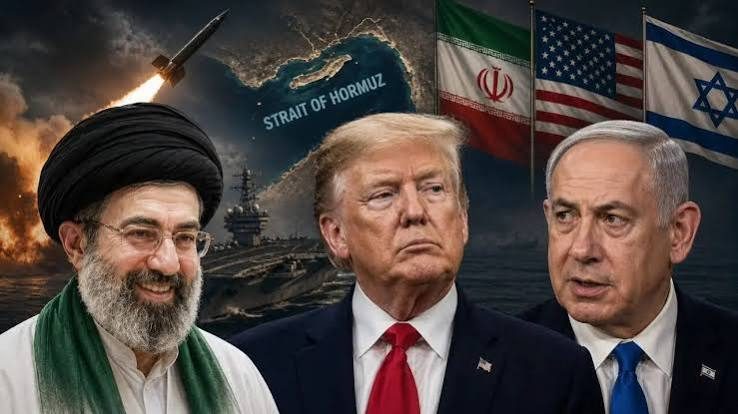
Washington / Tehran: US and Iranian officials in discussion over Hormuz Strait reopening during ongoing tensions. Iran has disputed an earlier report that it had agreed with the United States to extend their 60-day ceasefire, with a senior Iranian source telling Reuters on Wednesday that no discussions on an extension had taken place.
The source said Tehran did not consider the ceasefire something that could be extended because, from its perspective, the agreement had no defined start date.
“From Tehran’s perspective, the deal had no start date and therefore there was nothing to extend,” the source said.
The comments came after Pakistani government sources told Anadolu that Washington and Tehran had agreed to extend the 60-day ceasefire under the Islamabad Memorandum of Understanding (MoU).
The sources said both sides had conveyed their consent to mediators, but were still discussing how long the extension would last.
The conflicting accounts highlight the uncertainty surrounding the diplomatic process as the August 17 deadline approaches.
Iran and the US also remain divided over efforts to revive an interim agreement reached in June and establish a timeframe for implementing its provisions.
The senior Iranian source said mediators were discussing Washington’s return to the arrangement, but there had been no progress.
“There has been absolutely no progress on this issue,” the source said.
Neither Washington nor Tehran had publicly confirmed the reported agreement.
The Islamabad MoU, signed on June 17, gave the two countries 60 days to negotiate a final agreement and allowed the period to be extended by mutual consent. It followed a Pakistan-brokered ceasefire aimed at creating a framework for negotiations towards a permanent settlement.
However, talks later stalled over disagreements on security guarantees and freedom of navigation through the Strait of Hormuz, a key route for global energy supplies and international trade.
Pakistan has continued diplomatic efforts to revive the negotiations. Foreign Ministry spokesman Tahir Andrabi said Islamabad was making “all-out efforts” to bring the US and Iran back to the negotiating table.
“Pakistan is making all-out efforts to bring the two parties to the negotiating table and pave the way for peace and stability in the region,” Andrabi said at a weekly briefing in Islamabad.
He said Pakistan would continue working with “brotherly states” and use direct and indirect channels to support dialogue and address outstanding issues.
The reported agreement followed a visit to Tehran by Pakistani Interior Minister Mohsin Raza Naqvi, who met Iranian President Masoud Pezeshkian and Foreign Minister Abbas Araghchi.
Key provisions remain disputed : The 14-point Islamabad MoU covers the Strait of Hormuz, sanctions relief and Iranian financial assets.
Under the agreement, commercial vessels were to have free passage through the Strait of Hormuz. However, differences over the interpretation and implementation of the provision have remained a major obstacle to progress.
The US also committed to issuing waivers allowing Iran to export crude oil and petroleum products, along with related banking, insurance and shipping services.
Another provision concerns Iranian funds and restricted assets held abroad, with Washington committing to make them available for use through a mechanism to be agreed during negotiations.
The ceasefire came under severe strain in July when the US and Iran exchanged military strikes.
Washington launched attacks on targets inside Iran, while Tehran responded by striking what it described as US military facilities and equipment in several Arab countries, including Jordan, Bahrain and Kuwait.
Despite the escalation, Pakistan has continued diplomatic efforts to keep communication channels open and bring the two sides back to negotiations.