
Chennai: Experts explain how serious heart conditions can affect young, apparently healthy people, highlighting warning signs, risk factors and the importance of timely heart-health checks.
Divyanka Sirohi sudden demise at 29: Experts explain why serious heart problems can affect young people
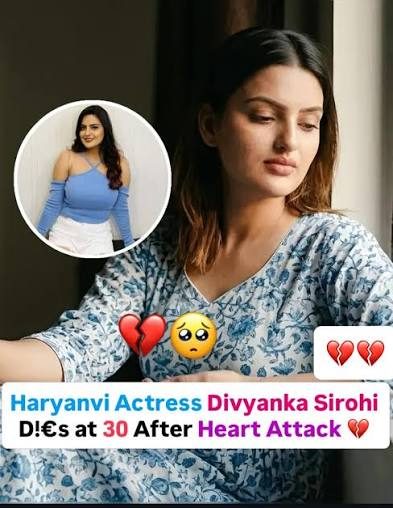
Haryanvi actress and social media personality Divyanka Sirohi passed away at the age of 30 after suddenly falling ill at her residence in Raj Nagar Extension, Uttar Pradesh, late Tuesday night.
Her sudden demise has left her family, fans and the Haryanvi entertainment industry in deep shock.
According to reports, she suffered a heart attack late Tuesday night at her home. Her family rushed her to a nearby hospital, but doctors declared her brought dead.
The news has left fans and members of the Haryanvi music and film fraternity stunned, with many expressing grief over her untimely passing. An official statement from her family is still awaited.
“So how can this happen?” asks Dr Rushikesh Patil, Associate Director of Cardiac Heart Centre, Dr L H Hiranandani Hospital.
"The first misconception is that a “heart attack” and “cardiac arrest” are the same thing. They are not. A major heart attack occurs when blood flow to heart muscle is suddenly blocked leading to chest pain or breathlessness, while cardiac arrest is an electrical catastrophe in which the heart suddenly stops pumping effectively mostly because of very fast erratic and abnormal heart rate".
"A heart attack is the commonest cause of cardiac arrest, but cardiac arrest can also occur because of many other causes like inherited electrical disorders or diseases of the heart muscle, which often gets unnoticed till the event happens".
"Undiagnosed cardiomyopathies—such as hypertrophic or arrhythmogenic cardiomyopathy—can create a substrate for life-threatening ventricular arrhythmias. Congenital abnormalities of the coronary arteries, myocarditis and inherited electrical disorders such as long-QT or Brugada syndromes are other possibilities. In some cases, even after extensive investigation, no structural abnormality is found and the diagnosis remains unexplained for sudden arrhythmic death. Many of such causes can remain silent until an adverse event happens."
Dr Sanjay Kumar Chugh, director and unit head of cardiology at Aakash Healthcare, adds, “The sudden demise of 29-year-old Haryanvi actress Divyanka Sirohi, reportedly due to a heart attack, has opened up an uncomfortable question again: why are serious cardiac issues being talked about more among people in their 20s and 30s?”
Heart disease is typically linked to older age, but younger adults can also be affected by cardiovascular problems. Sometimes a person can look very fit and healthy, and the risk factors are not yet evident. Genetics, cholesterol, blood pressure, diabetes, lifestyle habits and certain heart conditions can all be sources of cardiovascular risk.
Dr Patil says, “COVID-19 can affect the cardiovascular system in young people. During or after infection, inflammation, endothelial dysfunction, thrombosis and plaque destabilisation can increase the risk of myocardial infarction, arrhythmias and stroke".
"Large study also suggest that people infected during the early pandemic had higher subsequent cardiovascular-event rates, particularly after severe/hospitalised COVID, although this does not mean that every young person with COVID is at high risk, but conventional causes—smoking, dyslipidaemia, diabetes, hypertension, obesity, thrombophilia, coronary anomalies and spontaneous coronary artery dissection are still the leading causes in young.”
Dr Chugh adds, “A major concern is the rising prevalence of metabolic risk factors in young Indians. Gradually, high cholesterol, high blood pressure, obesity, insulin resistance and diabetes can take a toll on blood vessels and up the risk of coronary artery disease. A lifestyle involving lack of activity, smoking, excess alcohol intake, poor diet, chronic stress and insufficient sleep may all increase the risk.”
“India also carries a particularly important burden of cardiovascular health. Indians are at risk for heart disease at an earlier age compared to some other populations, so early prevention and identification of risk factors is important even in young adults,” Dr Chugh adds.
Dr Patil says, “This does not mean every young person needs extensive cardiac testing. Most young people are at very low absolute risk. But certain warning signals should never be ignored: exertional chest pain or breathlessness, unexplained fainting—particularly during exercise, or a family history of sudden unexplained death at a young age. Being fit, slim or outwardly healthy does not necessarily exclude an underlying cardiac condition.”
Age, thinness or physical activity do not guaranty you are free from cardiovascular disease, Dr Chugh says. Some conditions have a genetic component, and may not have obvious symptoms in the early stages.
“Familial hypercholesterolemia, for example, can result in very high levels of LDL cholesterol from an early age and increase the risk of early heart disease. Some inherited diseases of the heart muscle and electrical problems may not be diagnosed until a person develops symptoms,” Dr Chugh adds.
Therefore, a family history of early heart disease or unexplained sudden cardiac death should not be ignored. It may be a marker for earlier cardiovascular assessment.
Dr Patil says, “If a young person dies suddenly and unexpectedly, close relatives should discuss the possibility of inherited cardiac disease with a physician; appropriate evaluation can sometimes identify risk in other family members".
"Majority of cardiac events can be prevented- start regular screening in adulthood with blood pressure, weight/BMI and waist circumference, smoking and lifestyle assessment, family history, lipid profile and glucose/HbA1c. From around 40 years, calculate overall cardiovascular risk and repeat periodically; check Lp(a) once in a lifetime, especially with premature family history or unexplained risk".
"ECG, treadmill testing, echocardiography or CT coronary angiography are not routinely required in asymptomatic low-risk individuals and should be done selectively based on symptoms or risk profile.”
What symptoms should young people be looking out for?
Dr Chugh says, “Sometimes chest pain or pressure, unexplained shortness of breath, fainting, unusual tiredness, dizziness, or episodes of fast or irregular heart beat can be a sign of a cardiac problem. Special attention should be paid to symptoms that are brought on by exercise or exertion.”
“Symptoms of a heart attack can vary from person to person. You may have chest pain and also sweat, feel sick, have difficulty breathing or pain that spreads to your arm, shoulder, back, neck or jaw,” Dr Chugh adds.
“But in a young person, it doesn’t mean heart attack if they have chest pain. Symptoms such as these can arise from acidity, muscle problems, anxiety and a number of other conditions. But don’t just wave away severe, sudden or unexplained symptoms without a medical workup,” Dr Chugh adds.
Lifestyle and prevention
Dr Patil says, “Lifestyle has a major influence on heart-attack risk. Smoking, physical inactivity, unhealthy diet, obesity, poor sleep, excessive alcohol and uncontrolled BP, diabetes and cholesterol can accelerate atherosclerosis and trigger cardiovascular events".
"Conversely, regular exercise, a heart-healthy diet, healthy weight, good sleep, stress management and avoidance of tobacco can substantially reduce risk.”
Dr Chugh adds, “Prevention does not have to be left until middle age. Young adults should monitor their blood pressure, cholesterol and blood sugar, keep a healthy weight, exercise regularly, avoid tobacco, eat a well-rounded diet and get enough sleep.”
“People with a strong family history of early heart disease, high cholesterol, diabetes or hypertension may need more frequent surveillance and tailored medical advice,” Dr Chugh says.
“The death of a young person should not cause a panic or the feeling that all healthy 20 or 30 year olds are in immediate danger. Instead, it is a reminder that age and looks alone are not a measure of cardiovascular health,” Dr Chugh adds.
“Early identification of risk factors, knowing the warning signs and having the correct health checks can all help to detect cardiovascular problems before they become life-threatening.”
“know your heart and use heart for action, don’t miss a beat.”