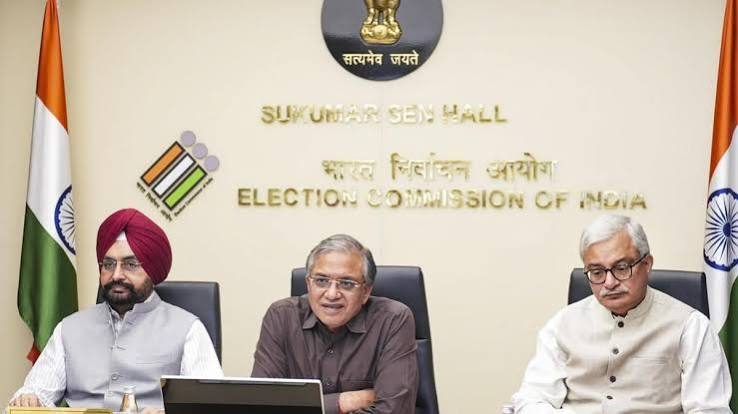

New Delhi : Chief Election Commissioner Gyanesh Kumar's tenure is under intense scrutiny following revelations of significant internal dissent from fellow election commissioners regarding contentious decisions on voter list revisions and electoral roll management.
When Gyanesh Kumar made headlines
CEC Gyanesh Kumar faces scrutiny over internal objections from fellow election commissioners regarding voter list revisions.
Election Commissioners Sukhbir Singh Sandhu and Vivek Joshi reportedly objected 14 times to decisions made without their knowledge.
The objections included changes to statutory voter registration Form 6 and centralised control of the electoral roll database.
Kumar's appointment as CEC under a new law, which altered the selection panel, had previously drawn opposition criticism.
The Supreme Court recently gave split opinions on referring pleas challenging the validity of the 2023 law to a larger bench.
When Gyanesh Kumar took charge as India's 26th chief election commissioner (CEC) in February 2025, his work on the abrogation of Article 370 of the Constitution and setting up the Ram temple trust featured prominently in accounts of his career.
Nineteen months later, he faces perhaps his sharpest challenge at the poll panel -- objections from both his fellow election commissioners to decisions made during the contentious Special Intensive Revision (SIR) of voter lists.
Internal Dissent Over Voter List Revisions
According to an Indian Express investigation, election commissioners Sukhbir Singh Sandhu and Vivek Joshi objected on record at least 14 times over the last 10 months to decisions and orders they said were issued without their knowledge.
The objections included changes to the statutory voter registration Form 6 and centralised control over the electoral roll database.
The Election Commission (EC) has said differing views are a normal part of deliberations and that its final decisions, including those concerning the SIR, were unanimous. Neither Sandhu nor Joshi has publicly spoken about the objections attributed to them.
Scrutiny of CEC Gyanesh Kumar's Tenure
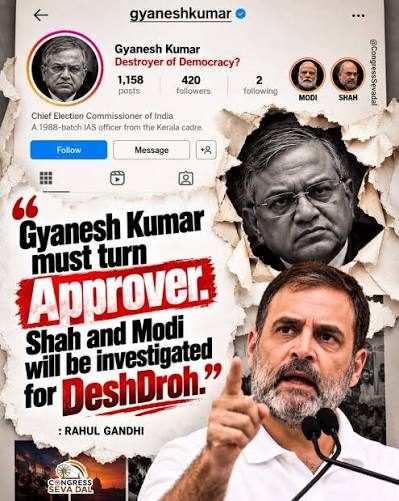
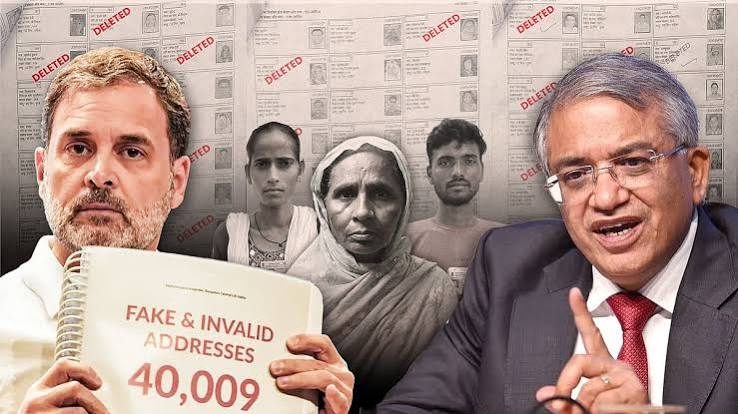
The disclosures have intensified a scrutiny of Kumar's tenure as the CEC. Opposition parties have accused the EC of excluding eligible voters during the SIR and favouring the ruling Bharatiya Janata Party, allegations the poll panel has rejected.
Earlier, Kumar's response to Leader of Opposition in the Lok Sabha Rahul Gandhi's 'vote chori' charge also drew criticism after he asked the Congress leader to substantiate it with a sworn declaration or apologise.
Kumar's appointment as the CEC had itself drawn criticism from the opposition.
He was the first person chosen for the post under a 2023 law that replaced the chief justice of India on the selection panel with a Union Cabinet minister, giving the government two members on the three-member panel.
Gandhi, its sole opposition member, sought a delay in the selection until the Supreme Court had heard petitions challenging the law.
On Wednesday, a two-judge Supreme Court bench gave split opinions on whether a batch of pleas challenging the validity of the 2023 law should be referred to a larger bench.
Background and Career of Key EC Officials
A 1988-batch Indian Administrative Service (IAS) officer of the Kerala cadre, Kumar retired as a secretary in the cooperation ministry in January 2024 and joined the EC in March, just before the Lok Sabha election schedule was announced.
He became the CEC on February 19, 2025. His term is due to end on January 26, 2029.
Kumar held several posts in the Kerala government before moving to senior assignments at the Centre.
In the Union home ministry, he worked on decisions following the abrogation of the provisions of Article 370 and on establishing the Ram Janmabhoomi trust after a Supreme Court verdict.
He later served as a secretary in the parliamentary affairs and cooperation ministries.
He also served as a joint secretary in the defence ministry and as a joint secretary and an additional secretary in the Ministry of Home Affairs (MHA).
According to Kumar's profile on the EC website, he studied civil engineering at the Indian Institute of Technology (IIT), Kanpur, business finance at the Institute of Chartered Financial Analysts of India (ICFAI) and environmental economics at the Harvard University.
Profiles of Election Commissioners Sandhu and Joshi
Sandhu joined the poll panel alongside Kumar in March 2024 and served on the commission during the Lok Sabha polls.
A 1988-batch IAS officer of the Uttarakhand cadre, he previously served as the state's chief secretary, the chairman of the National Highways Authority of India (NHAI) and the secretary to the Lokpal. He is due to retire from the commission in July 2028.
Joshi joined the EC on February 19, 2025, the day Kumar became the CEC.
A 1989-batch IAS officer of the Haryana cadre, he previously served as the Haryana chief secretary.
His central assignments included positions in the Department of Financial Services and the office of the Registrar General and Census Commissioner.
With Sandhu due to retire before Kumar, Joshi would be the senior election commissioner when the CEC's term ends, if both remain in office until then.
His appointment as the CEC would still have to be made through the selection process prescribed by law.