
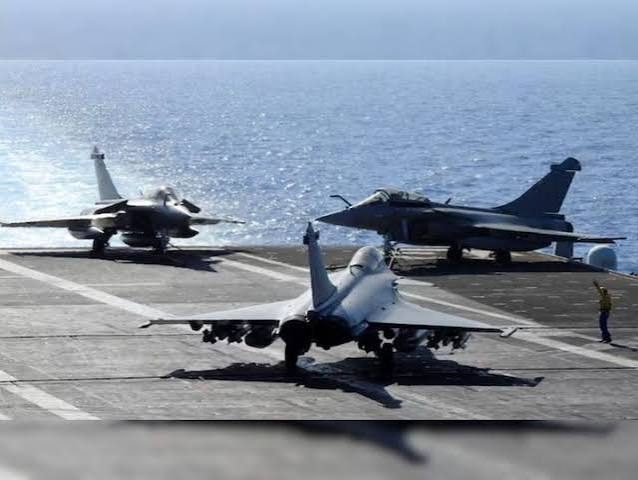
New Delhi/Paris: France wants international partners for the Rafale programme, but it is drawing a firm line around some of the technology that underpins the fighter’s combat capability.
That position has now become an important issue in talks with India, which is considering to buy 114 Rafale fighter jets.
Reports suggest that the country is unwilling to provide India access to the source code of the Rafale’s RBE2 AESA radar, MDPU mission computer and SPECTRA electronic warfare suite.
These systems form a core part of the aircraft’s digital architecture and handle functions such as sensor fusion, threat detection, electronic warfare and combat survivability.
India's concern goes beyond software access. It wants to know how much freedom the Indian Air Force (IAF) would have to modify the aircraft, integrate Indian weapons and carry out future upgrades without needing French approval.
A modern fighter jet is no longer simply an aircraft carrying weapons. Much of its combat capability depends on software that connects its radar, electronic warfare systems, sensors, weapons and mission computer.
If India does not get sufficient access to the underlying software architecture, integrating indigenous systems could become more complicated. The issue could affect weapons such as the Astra missile and potentially air-launched versions of the BrahMos system.
India has been pushing for greater control over the systems it operates as part of its effort to build domestic defence capabilities. For a fighter expected to serve for several decades, New Delhi wants room to make changes as Indian weapons, sensors and electronic warfare systems develop.
That makes the source-code question an important part of the 114-aircraft negotiations.
France's reluctance to share sensitive Rafale technology is not new. Paris has faced similar objections from the United Arab Emirates over technology transfer for the future Rafale F5 standard.
France is prepared to negotiate local assembly and industrial cooperation with India. The difficult area is access to the software and systems that give the aircraft its core combat capabilities.
Paris sees control over this technology as a way to protect intellectual property developed over decades. The French position also limits the scope for sensitive systems to be modified or accessed beyond what France considers acceptable.
India has a different calculation. New Delhi sees the Rafale purchase as a long-term defence and industrial partnership. The aircraft could serve for 30 to 40 years, during which its weapons, sensors and electronic warfare requirements are likely to substantially change. That makes technology access an important part of the value India attaches to the deal.
Russia's Su-57E offer adds another element to the negotiations. Moscow has repeatedly offered India access to source code and design documentation for the aircraft.
Such an offer gives New Delhi another model to compare with the French approach. The issue is not simply which fighter has better specifications. It is also about how much freedom India would have after buying the aircraft.
The French proposal offers India an advanced fighter and opportunities for industrial cooperation.
The concern in New Delhi is whether that partnership would provide enough technical access to allow Indian systems to be integrated and the aircraft upgraded according to India's future requirements.
Russia's willingness to negotiate source-code and design-documentation access therefore gives India additional leverage in negotiations with France.
The 114-aircraft requirement is a major opportunity for France and the Rafale programme. India is one of the world's largest defence markets and a large order could provide substantial work for the French aerospace industry while strengthening the Rafale ecosystem.
Meanwhile, France wants international partners for the next generation of the Rafale programme, including the F5 standard. The challenge is finding a balance between protecting sensitive technology and giving customers enough technical freedom to justify a long-term partnership.
India's demand for greater industrial autonomy makes that balance particularly important.
The negotiations therefore involve much more than the price of 114 fighters or where the aircraft will be assembled. The bigger issue is how much control India will have over a fighter it could operate for decades.
If France keeps strict limits on access to key Rafale systems, India will have to decide whether the aircraft's capabilities and industrial benefits make up for that dependence.
For Paris, the stakes are also high – securing a major Indian order could strengthen the Rafale programme, while failing to meet India's requirements could give competing fighter offers a stronger opening.