
Abu Dhabi : In today’s DNA, Zee News Managing Editor Rahul Sinha decodes the mystery surrounding the unidentified Flydubai FZ1073 co-pilot, the cockpit attack and the unanswered questions over motive and terror links.
Written By
The co-pilot accused of attacking Indian captain Smit Machchhar aboard Flydubai Flight FZ1073 remains unidentified, more than a day after the aircraft made an emergency landing in Saudi Arabia. Officials have disclosed fragments of his background, including reports that he is Omani, but his name, age and photograph have not been released as investigators examine motive and possible terror links.
The information gap has become one of the biggest unanswered questions surrounding the September 30 incident aboard the Dubai-to-Tel Aviv flight.
Machchhar has been publicly identified, his aviation background has been reported and his condition has been discussed by Indian officials. The man accused of attacking him inside the cockpit, however, has not been publicly named by Flydubai or UAE authorities.
What has been officially confirmed about Flydubai FZ1073?
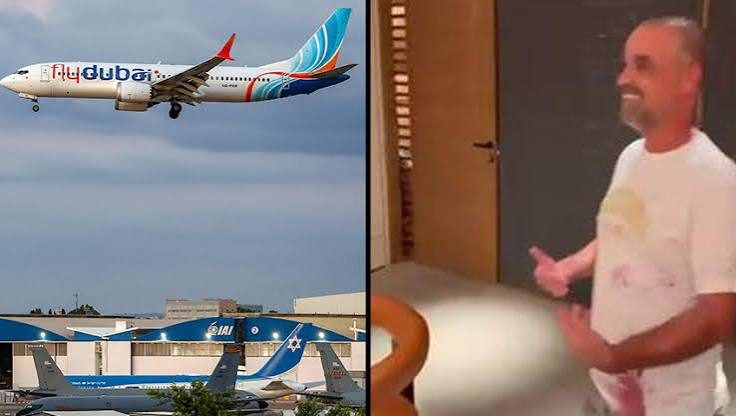
Flydubai said an "altercation" occurred on the flight deck of FZ1073 while the Boeing 737 was travelling from Dubai International Airport to Tel Aviv. Crew members travelling on the aircraft intervened, the plane was brought under control and it diverted to Tabuk in Saudi Arabia.
The UAE General Civil Aviation Authority described it as a security incident and confirmed that crew members were injured. It said investigators were examining the circumstances of the incident as well as operational and security issues.
Indian captain Smit Machchhar was seriously injured during the confrontation. Indian officials later said he was receiving medical treatment and was stable.
Who is the accused Flydubai co-pilot?
That remains the central unanswered question.
Israeli officials and several media reports have described the accused co-pilot as an Omani national. However, UAE authorities and Flydubai had not publicly confirmed his nationality in their initial official statements. The National reported that neither Oman, the UAE authorities nor Flydubai had confirmed the nationality at that stage.
No official statement reviewed on October 1 gave his full name, age or photograph.
That does not, by itself, show that his identity is being deliberately hidden. Criminal and aviation investigations can involve restrictions on releasing personal details while evidence is being collected, particularly when more than one country has jurisdiction or evidence relevant to the case.
Where is the accused co-pilot now?
The aircraft landed in Tabuk after the cockpit emergency. Israeli officials have said the suspected attacker was being held in Saudi Arabia and was expected to be transferred to the UAE after the Saudi investigation. That transfer plan had not been independently detailed by Saudi authorities in the official material available at the time of publication.
The UAE has a direct legal role because the aircraft is registered there and flies under the UAE flag.
UAE Attorney-General Hamad Saif Al Shamsi has ordered a specialist public prosecution team to investigate. The team is working with the General Civil Aviation Authority and other agencies.
Was it a terror attack?
That has not yet been established by the UAE investigation.
The Attorney-General said investigators would examine the circumstances and motive, including whether the incident was connected to terrorist activity, whether there was prior planning and whether anyone directed the alleged attack. UAE authorities have specifically urged the public not to draw conclusions before the investigation is complete.
Israeli officials have made stronger allegations. An Israeli official told The Times of Israel that investigators were looking at social-media activity allegedly linked to the co-pilot and claimed it showed extremist material. The official also cautioned that investigators could not reach a final conclusion until the inquiry was completed.
Those Israeli claims remain allegations pending the findings of the formal investigation.
What happened inside the cockpit?
Reports citing Israeli officials say Machchhar was attacked inside the cockpit and the aircraft then lost altitude rapidly. Al Jazeera reported that the plane fell from about 33,000 feet to 17,000 feet within roughly a minute during the confrontation.
Despite his injuries, Machchhar managed to open the cockpit door, allowing others aboard to intervene. Other qualified pilots travelling on the flight then helped regain control and the aircraft landed safely in Tabuk.
The flight was carrying more than 170 people.
Why has the co-pilot's identity become such a big question?
Abu Dhabi: The contrast is hard to miss. Machchhar's name, previous airline experience and aviation career became public within hours. By October 1, the accused co-pilot remained unnamed in official UAE and Flydubai statements.
There are also major questions investigators can answer without speculation: who the co-pilot is, where he previously worked, how long he had been employed by Flydubai, what security and employment checks were carried out, what happened in the cockpit and whether anybody else knew about the alleged plan.
The UAE investigation is expected to examine evidence that could establish those facts. Officials have not given a timetable for releasing the findings.
What Flydubai has said
Flydubai’s initial statement did not describe the episode as terrorism or identify either an ideological motive or the accused co-pilot. It confirmed a flight-deck altercation, intervention by crew members and the safe diversion to Tabuk.
That distinction matters. Claims that the co-pilot intended a terrorist attack have come largely from Israeli officials and subsequent reporting, while the UAE investigation is still examining whether terrorism, prior planning or outside direction played any part.
Until those findings are released, the accused co-pilot's identity and motive remain two of the biggest missing pieces in the FZ1073 investigation.