
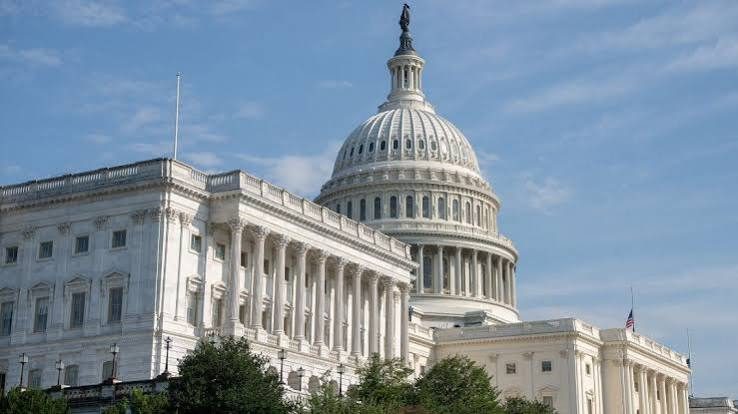
Washington : The US House of Representatives is currently debating a significant bill that could authorise the President to impose sanctions on Russia and substantial tariffs on its key oil and gas trading partners, including India and China, impacting global trade dynamics.
The US House of Representatives is debating a bill to authorise sanctions on Russia and tariffs on its oil and gas trading partners.
The proposed legislation targets major economies like India and China for their continued trade with Russia.
The bill's primary objective is to exert economic pressure on Russia to end the ongoing conflict in Ukraine.
Amendments seeking to limit presidential authority or specific country tariffs were defeated in the House Rules Committee.
The bill, previously passed by the US Senate, is now expected to proceed to a vote in the House.
The US House of Representatives on Wednesday concluded discussion on the bill that would authorise President Donald Trump to impose sanctions on Russia and steep tariffs on its trading partners in oil and gas, including India and China.
Piloting the Lindsey O Graham Sanctioning Russia and Iran Act of 2026, Congressman Michael McCaul, a Republican from Texas, argued that passing the bill would put maximum pressure on Russian President Vladimir Putin to bring him to the negotiating table to end the war in Ukraine.
Debate Over Presidential Authority And Tariffs
Opposing the bill, Congressman Gregory Meeks, a Democrat from New York, questioned the rationale for handing over more power to the President to impose sweeping tariffs. The bill is expected to be put to a vote later Wednesday.
"The President calls himself the 'Tariff Man'... why should we hand over this tariff man more authority," Meeks said.
"It does not give what Ukraine needs at this moment. They need to have the munitions to protect themselves and continue to do what they are doing to preserve their country and democracy," Meeks said.
Amendments Defeated In House Committee
Meeks had moved amendments to the bill that sought to scrap the entire section authorising the president to impose secondary sanctions on Russia's trading partners. However, the amendment was defeated at the House Rules Committee.
Similarly, the amendments to limit the sanctions to 11 countries including China, India and Turkiye, and to extend USD 15 billion to Ukraine to purchase munitions were also defeated when put to a vote by the House Rules Committee.
Bill's Scope And Strategic Objectives
The Lindsey O Graham Sanctioning Russia and Iran Act, passed by the US Senate by an overwhelming 86-11 vote last month, seeks to impose sanctions not only on Russia's leadership and energy sector, but also on the "shadow fleet" of vessels that enable Moscow to evade sanctions on oil deliveries.
It also seeks to authorise Trump to impose stiff tariffs on China, India and other countries to reduce their dependence on Russian oil and gas, as well as additional sanctions on Iran.
Republican Congressman McCaul said the provision for tariffs would give Russia's trading partners a choice to stop supporting Putin's aggression. "Pursuant to the bill's rule, only the top five importers of Russian oil will be tariffed. If a country falls off the top five list, the tariffs are removed. It incentivises the race to the bottom," McCaul said.
"Putin believes he can keep financing this war indefinitely. We need to change that calculation and bleed his regime economically dry... If Putin is rewarded for invading a sovereign nation... his Army will move into Moldova, Georgia and to the Baltic states," the Republican said.
Procedural Progress And Political Backing
The Bill cleared a procedural hurdle on Tuesday and advanced to the discussion and voting stage in the House after a 214-211 vote with two Democrats breaking ranks with the party and supporting the Republicans.
The Bill has faced considerable opposition on Capitol Hill since its introduction in April 2025, but got the approval from Trump to move ahead in July, days before the sudden death of Senator Lindsey Graham, the prime mover behind the initiative, on July 11.