
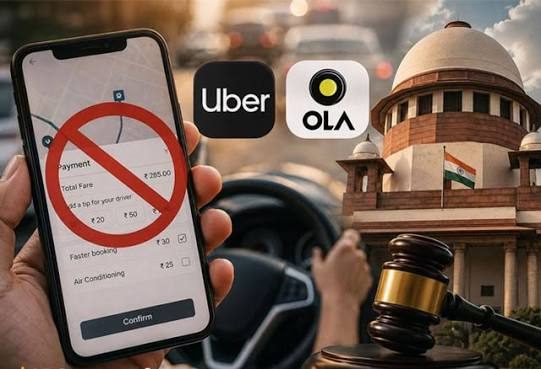
New Delhi : The Indian government has mandated that cab aggregators discontinue advance tipping options, with the Central Consumer Protection Authority penalising Rapido for unfair trade practices and "dark patterns" that mislead consumers into paying more before their rides.
The Indian government has ordered cab aggregators to stop providing advance tipping options, citing the practice as misleading and unfair.
The Central Consumer Protection Authority (CCPA) has fined Rapido Rs 10 lakh for unfair business practices, including advance tipping and "dark patterns."
Investigations are currently underway into the business practices of other major ride-hailing platforms like Uber and Ola.
Consumer affairs secretary Nidhi Khare stated that tipping should be completely voluntary and at the discretion of consumers after they have taken the ride.
Rapido's algorithm was found to use "Confirm Shaming," a dark pattern, by prompting riders to pay more after booking, creating a false sense of urgency.
The government has ordered cab aggregators to stop providing advance tipping options even before booking a ride as the practice is misleading and unfair, consumer affairs secretary Nidhi Khare said on Wednesday.
The secretary's comment comes a day after the Central Consumer Protection Authority (CCPA) slapped a Rs 10 lakh penalty on ride-hailing platform Rapido for various unfair business practices, including advance tipping for drivers.
The authority is currently examining the business practices of Uber and Ola.
Government Cracks Down On Advance Tipping
Responding to queries related to taxi ride aggregators, Khare on Wednesday said the National Consumer Helpline has received a lot of complaints against them. "(Consumers were) basically alleging that actually even before taking the ride, there was a concept of introducing an advance tip," she said, adding that consumers were being cajoled that unless they pay the tip, they will not get the ride.
"Now this we found to be misleading and also an unfair trade practice. And after detailed investigation into the matter and also after hearing, we have ordered discontinuation of this kind of you know built-in mechanism," said the secretary, who also heads the CCPA.
Why Advance Tipping Is Considered Unfair
Khare noted that tipping is completely voluntary, and it should be left to the discretion of the consumers after they have taken the ride.
On the Uber and Ola matter, she said the investigations are in progress. The action against Rapido is based on a sector-wide examination of cab and bike-taxi aggregator platforms operating in India.
The probe is being done to examine practices relating to pre-ride tipping and dynamic pricing. Already, the CCPA had issued notices to platforms, including Uber, Ola, Rapido and Namma Yatri, directing them to comply with the Guidelines for Prevention and Regulation of Dark Patterns, 2023.
Dark Patterns are deceptive user interface designs that mislead or manipulate consumers into making unintended choices.
Rapido Penalised For Dark Patterns
According to an official statement on Tuesday, the CCPA has imposed a "penalty of Rs 10 lakh on Roppen Transportation Services Pvt Ltd, which operates the ride-hailing platform Rapido, for misleading advertisements, unfair trade practices, unfair contract and dark patterns in the manner in which riders were prompted to pay more before their rides were confirmed".
How Ride-Hailing Algorithms Exploit Consumers
During its examination of various platforms, the authority found that the "Rapido app displayed prompts such as 'Higher the price, higher the chance of getting a ride' and 'Captains aren't accepting at Rs 60.
Try adding +10, +20, +30' while a rider's booking was still being processed".
Elaborating on the findings, the CCPA found issues in Rapido's algorithm.
"Rapido's algorithm first quoted a fare to the rider and, after the rider booked at that fare, prompted the rider to pay more on the ground that drivers were not accepting the original price," the regulator said. The CCPA noted that this practice creates a false impression that a rider's chances of getting a cab quickly depend on paying an additional amount.
As the rider has already committed to the booking, there is limited scope to negotiate.
"The practice was held to constitute 'Confirm Shaming', a dark pattern identified under the Guidelines for Prevention and Regulation of Dark Patterns, 2023, as it creates a sense of urgency and fear of losing the ride if the consumer does not agree to pay more," the authority said.
At the time of booking the ride, the CCPA noted that the fare displayed to a rider takes into account factors including distance, time, traffic, tolls and the amount payable to the driver.
Therefore, the CCPA found no justification for subsequently suggesting that the rider pay an additional amount for the same ride before the ride had commenced.