
New Delhi: The issue off marital rape and the current laws on it are
expected to come under intense scrutiny in the Supreme Court as the
Chief Justice of India gets ready to hear a bunch of petitions in
three weeks.
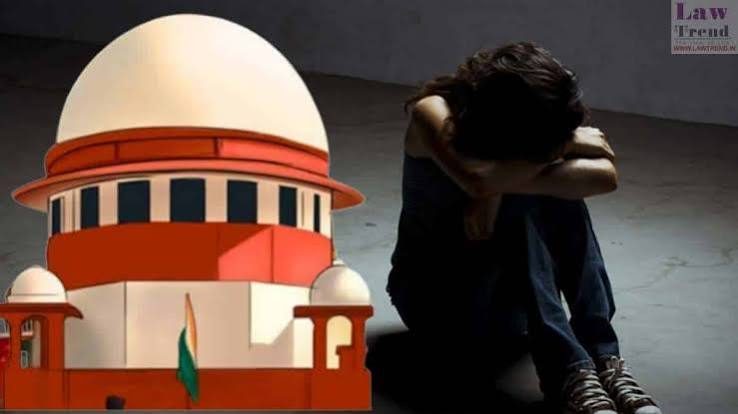
A Bench led by Chief Justice of India Surya Kant made it
clear that it is time to take a fresh look at the law in order to
protect victims of marital rape, while the Centre gave it a reminder
that legislation is not in the court's jurisdiction.
Marital rape has never been criminalised in India in view of the
social matrix despite intense pressure from women's groups. It is the
only exception that blocks legal action in cases of rape.
Apparently keeping the Centre's reservations in mind, the Bench said
it will primarily examine two questions:
* Whether a man can be prosecuted even if the marital rape remains an exception.
* Whether the exception itself is constitutionally valid.
"A woman subjected to involuntary sexual intercourse (in marriage) is
undoubtedly a victim. We will protect victims. The only question is
whether the State defines it as rape and if the exception is still
part of statute," said a bench led by the Chief Justice.
"Marriage cannot result in extinction of individual autonomy," the
judges said, pointing out that the court must reckon with the existing
statutory exception before permitting prosecution for rape within
marriage.
"The question before us is whether despite such status as a victim,
the State defines it as rape or not. Where grievous injury or harm is
caused, there are other provisions. The exception does not protect a
perpetrator if he has caused grievous injury or death," said Justice
Joymalya Bagchi.
The need to take a call on the "constitutional validity of the
exception", without which a constitutional court cannot prosecute,
Justice Bagchi said.
"The issues to be considered is Mens Rea (criminal intent),
culpability, (and the) way we interpret the constitution so that we
don't spring a surprise on our citizens," Justice Bagchi added.
Speaking for the Centre, senior advocate SG Mehta said even if
"marital rape" is to be criminalised, it is not up to the Supreme
Court to do so.
"It is the job of legislature and the executive and not the judiciary.
It is not the domain of the court," he said.
The government, he said, is of the view that making marital rape a
crime will end the institution of marriage. Besides being a legal
issue, it has social ramifications.
The affidavit filed by the government has said India cannot blindly
follow the West and criminalise marital rape as "several factors" have
to be taken into account which are unique to Indian context.
Till date, more than 130 countries have criminalised marital rape,
agreeing that marriage cannot mean freedom to commit sexual violence.
India though, continues with the outdated British rule - the second
exception to Section 375 of the Indian Penal Code is now part of the
Bhartiya Nyaya Samhita as Section 63.
Currently, UK prosecutes marital rape under the country's strict rape
laws. International bodies including the United Nations has repeatedly
urged India to strike out the archaic exception that is seen as
robbing women of liberty, equality and control over their bodies.
The first petitions to criminalise marital rape were filed in Delhi
High Court in 2015.
In 2022, the Delhi High Court had delivered a split verdict on whether
marital rape should be a criminal offence. The matter then reached the
Supreme Court.