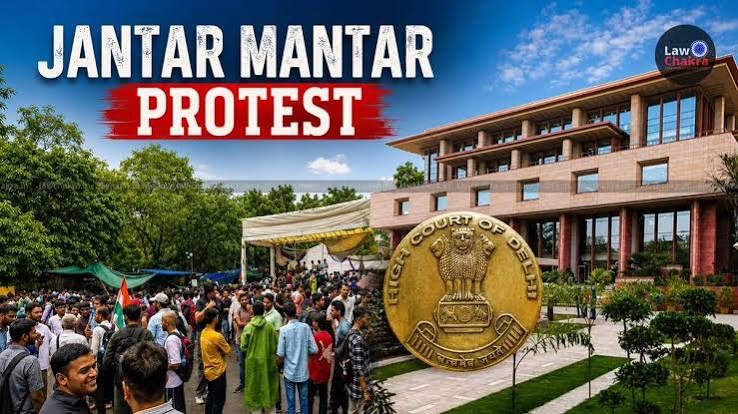

New Delhi : Delhi Police has officially denotified the iconic Jantar Mantar as a protest site, designating Ramlila Maidan, Burari Ground, and CBD Ground as new venues amidst heightened security concerns and disruptions in the national capital.
Delhi Police has officially denotified Jantar Mantar as a designated protest site, citing security and logistical challenges in the New Delhi district.
Three new venues have been designated for protests: Ramlila Maidan, Burari Ground, and CBD Ground in East Delhi.
The decision was made based on recommendations from a Ministry of Home Affairs committee formed to identify alternative protest venues.
The move follows recent agitations that caused significant disruption and security concerns in the administrative heart of the capital.
A detailed and revised Standard Operating Procedure (SOP) for organising protests at the new venues will be issued separately.
Delhi Police has denotified Jantar Mantar as a designated site for protests and named three new spots for holding such demonstrations, a development that comes after a series of agitations over recent months left New Delhi district, the administrative nerve centre of the government, paralysed.
Delhi Police Commissioner Anurag Kumar issued the standing order on October 11, naming Ramlila Maidan, Burari Ground and CBD Ground as the new designated sites for protests and demonstrations.
New Designated Protest Venues
While Ramlila Ground, in Central District, is four km away from the current site, the CBD Ground in East District is 12 to 13 km and Burari Ground in North District is nearly 21 km away.
"Ministry of home affairs, Government of India, had constituted a committee to examine alternative proper venues for citizens' right to organise protest/demonstrations in place of the existing 'designated site'," the order read.
Based on the committee's recommendations, Jantar Mantar as a protest venue has been denotified, it said.
"Three new venues, viz, Ramlila Ground, Burari Ground and CBD Ground, East Delhi, have been designated as new venues for organising protest/demonstrations," it said.
Further, it said that a detailed and revised SOP for organising protests and demonstrations at these three venues will be issued separately.
"This is in partial modification of earlier Standing Order No. L&O/48/22 dated 28.04.2022," the standing order issued by Delhi CP said.
Reasons for the Change
The move comes amid heightened security arrangements in the national capital, following calls for protests at Jantar Mantar by Cockroach Janta Party (CJP) and opposition leaders.
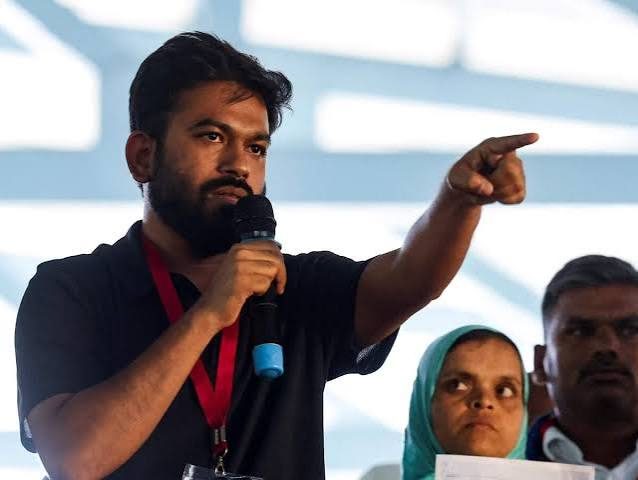
On Monday, CJP leaders Ashutosh Ranka and Saurav Das visited the Parliament Street police station to demand a fresh date for holding a peaceful protest at Jantar Mantar.
The New Delhi district was virtually in a lockdown in recent days after authorities refused permission for protests, causing inconvenience to office-goers, commuters and others.
The New Delhi district is considered a sensitive area as it houses Parliament and several important government and private offices, along with the residences of the President, prime minister, ministers and other prominent dignitaries.
Any large-scale protest in the district poses significant logistical and security challenges for the police, given the concentration of vital establishments and restricted-access areas.
Impact on Commuters and Security
The district also houses the New Delhi Railway Station, a major transport hub used by thousands of commuters travelling to different parts of the country every day.
Security restrictions, road closures or traffic diversions in the surrounding areas can affect passengers and disrupt access to the station.
A large number of people travel daily to offices in central and New Delhi using the Metro.
Restrictions on entry and exit at Metro stations during protests can result in overcrowding, inconvenience and chaos for commuters, particularly during peak hours.
Janpath Metro Station Gate Number-2 is the closest to Jantar Mantar. Patel Chowk, Central Secretariat and Rajiv Chowk Metro Station are also nearby.
Whenever a large protest is anticipated, Delhi Police has to deploy additional personnel, erect barricades, regulate vehicular movement and establish security cordons at sensitive locations.
Such arrangements often require traffic diversions and restrictions at major road junctions, leading to congestion on adjoining roads and inconvenience to office-goers and other commuters.
Police personnel are also deployed to prevent protesters from entering restricted areas, maintain public order and ensure the safety of government buildings and other sensitive establishments.
The arrangements require coordination among district police, traffic police and other security agencies.
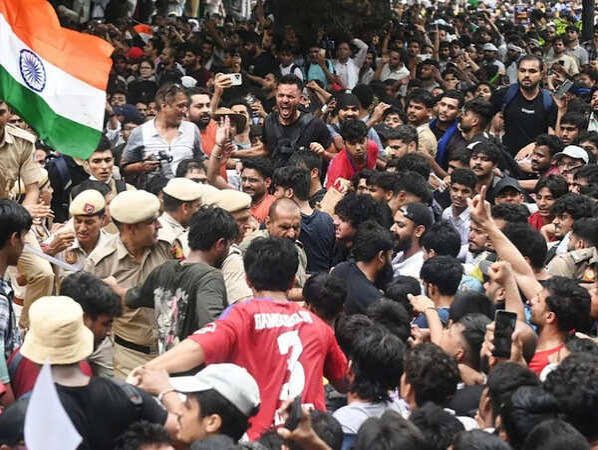
The July 20 clashes in the New Delhi district had highlighted the potential security challenges arising from protests. What began as a small gathering by the CJP escalated into a major law-and-order situation, prompting police action and an investigation into the violence.