

Dhaka : Amidst recent diplomatic friction, Indian High Commissioner Dinesh Trivedi engaged in high-level talks with Bangladesh Prime Minister Tarique Rahman and Foreign Minister Khalilur Rahman to address concerns stemming from former Prime Minister Sheikh Hasina's controversial virtual address from India.
Dinesh Trivedi calls on Bangladesh Prime Minister Tarique Rahman
Indian High Commissioner Dinesh Trivedi met with Bangladesh Prime Minister Tarique Rahman and Foreign Minister Khalilur Rahman to address recent diplomatic tensions.
The friction arose after former Bangladesh Prime Minister Sheikh Hasina's virtual address from India on August 5, which Dhaka condemned.
Hasina, ousted in 2024, expressed her resolve to return to Bangladesh in December to restore democracy, despite potential risks.
India clarified its non-involvement in Hasina's private event, stating it does not endorse any views expressed there.
The meetings also precede India's invitation to PM Rahman for the BRICS Summit in September, highlighting ongoing bilateral engagement.
Indian High Commissioner to Bangladesh Dinesh Trivedi on Monday met with Bangladesh Prime Minister Tarique
Rahman in a significant diplomatic engagement between the two neighbours amid diplomatic friction following former Prime Minister Sheikh Hasina's virtual address in New Delhi on August 5.
The meeting comes a day after Trivedi held a one-on-one meeting with Bangladesh Foreign Minister Khalilur Rahman on Sunday, who was also present at the meeting.
The High Commissioner's meeting with top Bangladesh leadership assumes significance as Dhaka and New Delhi have recently witnessed diplomatic friction over former Bangladesh Prime Minister Sheikh Hasina's virtual press interaction from India on August 5, the second anniversary of her ouster after a student-led uprising in 2024.
Hasina's Address and Dhaka's Protest : During her address, Hasina stated that she remains resolute about returning to her homeland in December to put the nation on the "right track" by restoring democracy, despite acknowledging the risk of imprisonment or a death sentence upon her return.
Bangladesh's Ministry of Foreign Affairs had registered a strong protest and condemned the statements, noting that the incident impacted public sentiment and complicated efforts to enhance bilateral cooperation.
Dinesh Trivedi calls on Bangladesh Prime Minister Tarique Rahman
Optimism for Bilateral Engagement : Speaking to reporters in Dhaka on Sunday after inaugurating a children's corner at the Indian Visa Application Centre, Trivedi expressed optimism ahead of his meeting with Tarique Rahman and stressed the importance of direct engagement between the leaders of the two countries.
"I feel that when... when two leaders meet, a lot of problems are solved. Problems are sorted out when we talk to each other. And I have full confidence that people are together, and the solution will definitely happen... it will happen. I am very confident. There is nothing negative here; everything is positive," the Indian envoy said.
Speaking about Tarique Rahman, Trivedi said, "The Prime Minister of Bangladesh... we all respect him a lot. I have listened to his speeches many times, and he talks from his heart. This, I have seen. He is a people's person. And our Prime Minister is also of the people."
India's Stance on Hasina's Event : Relations between Dhaka and New Delhi have come under renewed pressure following remarks made by Hasina from India on August 5 at a private event organised by the Foreign Correspondents' Club of South Asia.
Hasina fled Bangladesh on August 5, 2024, and took refuge in India following the political upheaval that brought an end to her long tenure as Prime Minister.
India had sidelined itself from Hasina's engagement, stating that the government has no involvement in the event related to Hasina in the national capital.
The Ministry of External Affairs had stressed that the event was being organised by a "private media entity" and that New Delhi does not endorse any views that may be expressed there.
"The interaction you refer to is being organised by a private media entity. The government has no involvement whatsoever in it. Neither does it endorse any views that may be expressed at the forum," MEA spokesperson Randhir Jaiswal said.
The meeting also comes amid India's invitation to Rahman to attend the BRICS Summit in September, in his capacity as the current chair of BIMSTEC.
...............
'Will pure petrol come from your father's house': BJP MP sparks row
NEW EELHI : BJP MP Janardan Mishra passionately defends India's ethanol blending policy, emphasising the nation's significant crude oil import dependency and challenging critics to consider alternative fuel sources for energy security.
BJP MP Janardan Mishra strongly defends the Centre's ethanol blending policy, questioning opponents.
India imports 80 per cent of its crude oil, making ethanol blending crucial for energy security.
Mishra highlights global geopolitical challenges affecting oil supply routes. He cites Brazil's successful use of 100 per cent ethanol in vehicles without issues.
Experts in India believe ethanol does not harm vehicle engines, despite "unnecessary" opposition.
Amid the ongoing controversy over the blending of ethanol in petrol in the country, Bharatiya Janata Party MP from Rewa, Janardan Mishra, on Sunday defended the Centre's ethanol policy and asked its opponents, "Will pure petrol come from your father's house?"
Addressing an event to inaugurate new flight services from Rewa to Bhopal and Kolkata, Mishra said that India produces only 20 per cent of crude oil, while 80 per cent has to be imported from abroad.
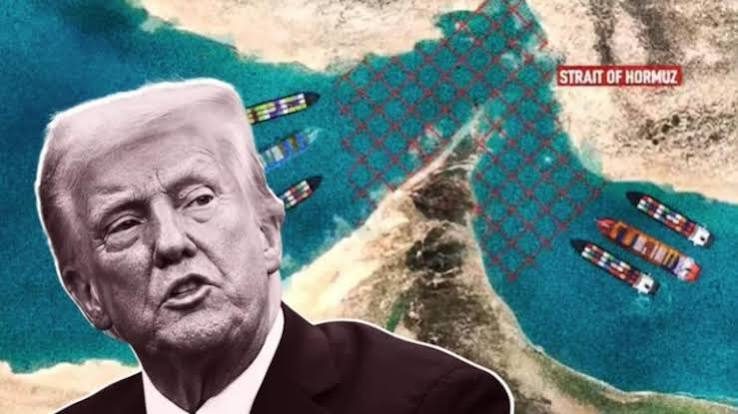
Addressing India's Crude Oil Dependency : Citing the global geo-political situation, the BJP MP claimed that ships have to travel an additional distance of approximately 18,000 km to supply oil.
"In such a situation, when Prime Minister Narendra Modi talks about blending 20 per cent ethanol in petrol, some people start protesting."
"A movement is underway claiming that ethanol won't work, pure petrol will. Will pure petrol come from your father's house? If there's no pure petrol in the country, where will it come from?" he said.
Ethanol Blending: A Global Perspective: Mishra also said that vehicles in India can run on ethanol blending, but some people are saying don't use it.
"If ethanol is not produced, where will petrol come from, where will diesel come from?"
Defending ethanol blending in petrol, he claimed that in Brazil, vehicles run on 100 per cent ethanol, and there are no problems with vehicles there.
Brazil produces maximum ethanol in the world, which is why vehicles there run on 100 per cent ethanol, he said.
Mishra, who often makes headlines for his controversial comments, said that experts in India also believe that ethanol does not harm vehicle engines, yet there is "unnecessary" opposition to it.
He also claimed that if there is any place in the world today where inflation is the lowest and employment is highest, it is in India.