
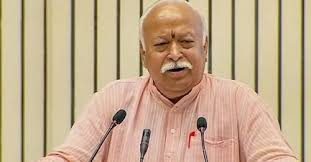
The RSS chief said people needed to exercise self-restraint and adopt a balanced approach to development to ensure the well-being of humans, animals and the environment.
RSS chief Mohan Bhagwat on Thursday said India could draw on its traditional knowledge and experience to offer the world a new model of development, as countries increasingly looked to the country for solutions.
"We are not masters of nature; we are a part of it," Bhagwat said, underlining the need for harmony between human life, animal health and the environment.
He was addressing a gathering after the inauguration of a veterinary and agriculture college established by the Datta Meghe Foundation at Ramtek in Nagpur district.
Biodiversity, ecology, animal health and environmental conservation were essential for human well-being, Bhagwat said, stressing the need for a lifestyle that ensured the well-being of everyone rather than just oneself.
“Our vision of life should be such that it is not merely about my life, but about everyone’s life,” Bhagwat said.
He said India should offer the world a new model of development based on its traditional knowledge, holistic approach to life and self-reliance, emphasising that humans, animals and nature were interconnected.
"The world is increasingly looking towards India for solutions," he added.
The RSS chief said people needed to exercise self-restraint and adopt a balanced approach to development to ensure the well-being of humans, animals and the environment.
People should not become arrogant after achieving success or fame and should remember those who had been left behind, he added.
The modern world had earlier viewed humans as masters of nature and believed natural resources could be exploited without consequences. However, it was now realising that all life forms were interdependent, he noted.
Bhagwat said the concept of One Health, which links human, animal and environmental health, had become familiar to the modern world only in the past 20 to 30 years, whereas India had traditionally followed such an integrated approach.
"If the environment is not healthy, we cannot remain healthy," the RSS chief said, adding that diseases affecting animals could also spread to humans.
He also stressed the importance of self-reliance, saying dependence on others could expose nations to pressure and exploitation.
"Self-reliance is extremely important because it makes human beings independent," he said.
India's development should also contribute to the progress of the world, Bhagwat said, adding that every nation should work towards the welfare of others alongside its own development.
Referring to cattle breeds, Bhagwat said India had neglected its indigenous varieties while importing foreign breeds to improve milk production.
Cattle taken from India had contributed to the development of breeds abroad, while the country had failed to make adequate use of its own resources and knowledge, he said.
Bhagwat said the foundation's new initiative should become a successful example of India's development and contribute to a peaceful and prosperous world.
Maharashtra Chief Minister Devendra Fadnavis said climate change was adversely affecting agriculture and stressed the need for research, innovation and skilled manpower to increase farm productivity and improve farmers' prosperity.
Union Minister Nitin Gadkari said the Vidarbha region produced one crore litres of milk, compared with eight crore litres in Kolhapur.
The expansion of the Mother Dairy plant in Nagpur would help strengthen the dairy sector in Vidarbha, he said.
The establishment of agriculture and veterinary colleges would help fulfil the vision of promoting agricultural development in the region, the Nagpur MP stressed.
RSS annual meet to begin in Indore on Monday; centenary review, global outreach on agenda