
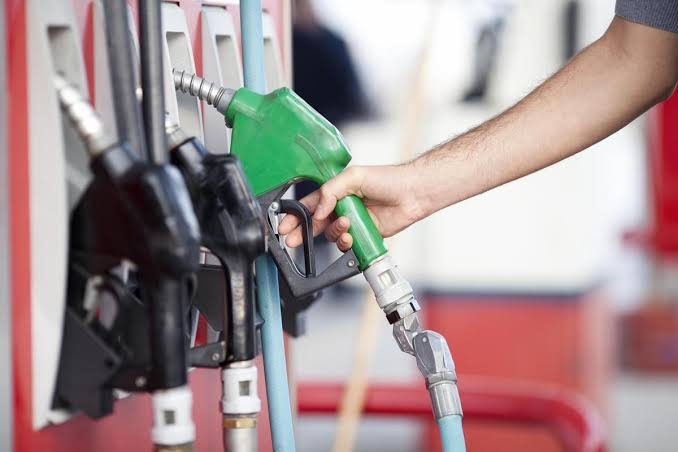
New Delhi: The road transport ministry has officially permitted flex-fuel vehicles capable of running on up to E100 ethanol, marking a significant step towards reducing crude oil dependence and promoting green transportation.
The road transport ministry on Monday notified changes to the Central Motor Vehicles Rules, allowing flex-fuel vehicles to run on up to E100 (nearly pure ethanol).
E100 fuel is exclusively for vehicles designed and certified for it, not for standard E20 or normal fuel vehicles.
The government also increased the vehicle weight limit for light petrol and diesel vehicles to 3,500 kg from the previous threshold of 3,000 kg.
Maruti Suzuki India launched India's first flex-fuel passenger vehicle, the Wagon R Flex Fuel, in June this year.
This policy aims to reduce India's dependence on imported crude oil and mitigate vulnerability to energy crises, with other major automakers also developing flex-fuel options.
The road transport ministry on Monday notified changes to the Central Motor Vehicles Rules, allowing flex-fuel vehicles that can run on up to E100 (nearly pure ethanol).
E100 fuel allows vehicles to run on nearly pure ethanol.
A senior road transport ministry official said fuel beyond E20 (20 per cent ethanol-blended petrol) and up to E100 is intended only for vehicles designed and certified to use it and will not be applicable for other vehicles. Vehicles that use E20 or normal fuel can't use E85 or E100 fuel.
Understanding The New Flex-Fuel Regulations
The ministry of road transport and highways (MoRTH) has changed certain vehicle classification thresholds, fuel specifications, and technical references used in emission-related tables and testing provisions.
Additionally, the government has raised the vehicle weight limit to 3,500 kg from the previous threshold of 3,000 kg for light petrol and diesel vehicles affected by these changes.
In June this year, Maruti Suzuki India launched India's first flex-fuel passenger vehicle, introducing Wagon R Flex Fuel capable of running on ethanol-petrol blends from E20 to E100.
The government has been promoting ethanol-blended petrol as part of its strategy to reduce dependence on imported crude oil, one of the biggest contributors to its current account deficit.
The country has already rolled out E20 fuel, containing 20 per cent ethanol and 80 per cent petrol.
India's Drive Towards Energy Independence
Flex-fuel vehicles are designed to run on higher ethanol blends such as E85 (85 per cent ethanol, 15 per cent petrol) and E100 (near 100 per cent ethanol), unlike conventional petrol vehicles currently approved for lower ethanol concentrations.
Major automakers, including Toyota Motor Corporation, Tata Motors, and Hyundai Motor Company, are also developing flex-fuel vehicles for the Indian market as policymakers push to reduce the country's fossil fuel import bill.
In the current scenario, when the West Asia conflict has left many countries, including India, vulnerable to the energy crisis, flex-fuel vehicles assume all the more importance.
Earlier, MoRTH proposed amendments to vehicle emission rules to widen the scope for higher ethanol blends and alternative fuels, paving the way for flex-fuel and pure biofuel vehicles across vehicle categories.
The draft changes to the Central Motor Vehicles Rules, 1989, were aimed at providing for wider use of fuels such as E85 and E100, as well as B100 biodiesel and hydrogen-CNG combinations.