
New Delhi : When BRICS was established in 2006, India's GDP growth rate was above 9 per cent. However, by 2012-13, growth had fallen to around 5 per cent, leading to growing concerns over India's economic prospects.
Western media, economists and rating agencies began describing India as the weakest link in BRICS, with some even questioning whether the country should remain part of the grouping.
BRICS began as a platform for some of the world's fastest-growing emerging economies, but over the past two decades, the grouping has evolved into an influential organisation challenging the dominance of Western powers.
India, one of its founding members, has undergone a similar transformation, moving from being questioned over its place in the bloc to playing a leading role.
A detailed analysis of India's 20-year journey within BRICS, examining how the country strengthened its economic and diplomatic position and emerged as one of the grouping's key members.
When BRICS was established in 2006, India's GDP growth rate was above 9 per cent. However, by 2012-13, growth had fallen to around 5 per cent, leading to growing concerns over India's economic prospects.
Western media, economists and rating agencies began describing India as the weakest link in BRICS, with some even questioning whether the country should remain part of the grouping.
On March 27, 2013, the BBC published an article asking whether Indonesia should replace India as the "I" in BRICS. The debate reflected the doubts surrounding India's economic performance at the time.
Jim O'Neill, the Goldman Sachs economist who coined the term BRIC, had also described India's economy in 2012 as the least attractive among the BRIC nations in terms of valuation.
Rating agency Standard & Poor's warned that India could become the first BRIC country to lose its investment-grade sovereign rating. Such assessments added to concerns among international investors about the risks of investing in India.
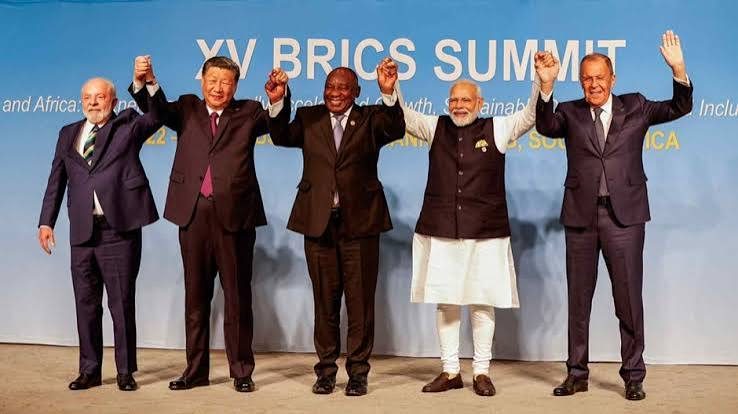
The situation, however, has changed significantly over the past 13-14 years. India is now not only firmly established within BRICS but is chairing the grouping's summit for the fourth time.
The presence of Russian President Vladimir Putin, Chinese President Xi Jinping, Iranian President Masoud Pezeshkian and the Crown Prince of the UAE in New Delhi has also highlighted India's growing diplomatic influence.
India's role in expanding BRICS has also grown. Indonesia, which was once suggested as a possible replacement for India, is now a BRICS member with India's support. Indonesia's President has publicly expressed gratitude to India for helping the country join the grouping.
Pakistan, meanwhile, applied for BRICS membership in 2023. However, it was neither admitted as a member nor granted partner-country status.
India emerges as a major growth engine : Economic figures underline the shift in India's position. India recorded GDP growth of 7.8 per cent in the first quarter of the current financial year, making it the fastest-growing major economy in the world. Its growth rate is now higher than that of China, Russia and Brazil.
Earlier this month, the Japan Credit Rating Agency upgraded India's rating from BBB+ to A-minus. The International Monetary Fund has also described India as a major engine of global growth.
India's economic transformation is also reflected in its GDP. When BRICS was established in 2006, India's GDP stood at around $1 trillion. It is now close to $4 trillion.
India's position in the global GDP rankings has also improved. The country was ranked 12th in 2006, while it now ranks sixth, according to the IMF.
The change marks a sharp turnaround from the period when India's economic growth and investment prospects were being questioned. A stronger economy and financial system have helped India consolidate its position within BRICS and increase its influence in the wider global economy.
India's growing influence within BRICS : Over the years, India's position has shifted from being viewed as the bloc's weakest link to being regarded as one of its strongest engines of growth. Its expanding economy, growing diplomatic reach and role in shaping BRICS have strengthened its standing within the grouping.
The transformation also echoes the words of Swami Vivekananda: "Arise, awake, and do not stop until the goal is reached."
As BRICS marks two decades, India's journey within the grouping reflects its broader economic and strategic rise. From facing questions over its place in the bloc to helping shape its future, India has emerged as a central force in BRICS.