
Palvancha/Kothagudem : In the forest-fringed landscape of Bhadradri Kothagudem, where agriculture and forest resources remain closely connected to rural livelihoods, a small enterprise is experimenting with a different way of doing business — one that seeks to combine organic farming, traditional knowledge, local resources and modern food processing.
Charitha Organic Cultivation and Solar Dryers , based at Petcheru village near Palvancha, was established in October 2024 with a simple premise: natural resources available in the region can become the foundation for healthier food, value-added products and rural employment.
The initiative, according to its promoters, grew out of the ideas of Dr S Somaraju Dora and his interest in nature and sustainable food systems.
Potula Jaya heads the organisation as chairperson. What started as an organic cultivation initiative has gradually expanded into a range of activities — solar drying, quail rearing, vetiver cultivation, spirulina production, fisheries and processing of forest produce.
The enterprise now directly employs 20 people, including 15 women and five men, while about 15 farmers are associated indirectly with its activities. For the organisation, however, employment numbers are only one part of the story.
The larger objective is to create a local chain in which farmers and forest-product collectors can move beyond selling raw materials and participate in processing and value addition.
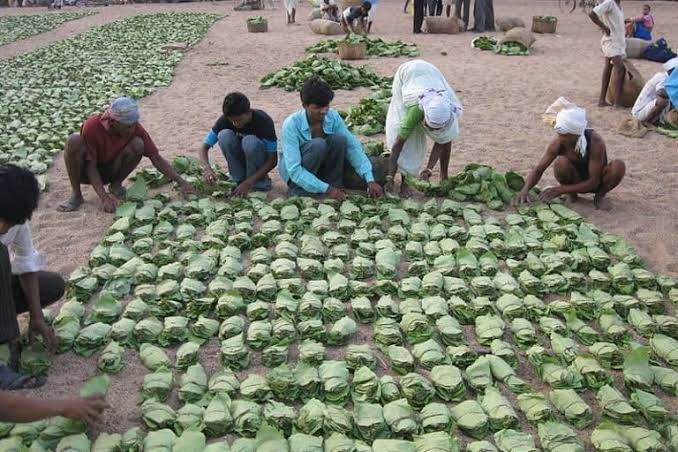
Turning forest produce into products : Across tribal and forest-dependent communities, products such as mahua flowers, amla, karakkaya, thanikaya and honey are often collected and sold in raw form.
Charitha Organics is attempting to add another stage to that chain by processing such produce into consumer products.
Mahua flowers, for example, are being used to make laddus, oil, nectar, soap and herbal hair oil. Moringa leaves are processed into powder, tablets, face packs, chilli powder and soap. Karakkaya is being converted into tea powder, mouthwash and triphala powder.
The underlying idea is that value need not leave the producing region along with the raw material. Processing and packaging locally can create additional economic activity and, potentially, more income opportunities for farmers, collectors and workers.
The organisation is also working with millets, producing items from ragi, foxtail millet, pearl millet and sorghum. Millet rava and powders form part of its product range.
The effort comes amid renewed consumer interest in traditional grains and minimally processed foods. Agriculture meets technology: Organic farming remains the foundation of the enterprise, but technology has been brought into the processing side.
Solar dryers are being used to dry agricultural and natural products. The aim is to preserve products for longer periods and develop value-added foods without depending entirely on conventional energy-intensive drying methods.
The combination of organic cultivation and solar processing is intended to create a broader production cycle — from growing and collecting raw materials to processing and marketing finished products.
For a rural enterprise, that diversification can also reduce dependence on a single agricultural activity. A livelihood model beyond crops: The organisation has extended its activities into livestock and fisheries as well.
An associated quail-rearing unit, the Jitesh V Patil Earlier district Collector Quail Rearing Centre, produces quail eggs and meat and also prepares pickles. The centre provides direct employment to three people.
The enterprise is cultivating vetiver, a plant known for its aromatic and traditional medicinal uses, and is exploring the development of value-added herbal products from it.
Fisheries have also been introduced as an additional income stream, with fish being reared alongside agricultural activities.
The idea behind these multiple activities is to create a diversified rural livelihood model in which income does not depend entirely on one crop or one season.
One of the organisation’s newer ventures is spirulina, a nutrient-rich microalgae widely marketed as a health food. The company plans to complete its spirulina project and produce it locally, with an eventual ambition of reaching international markets.
For a rural enterprise, entering an export-oriented segment would represent a significant shift from conventional agricultural marketing. But the promoters see it as an opportunity to demonstrate that products originating in a village can potentially find consumers beyond the local market.
Women form the majority of the enterprise’s direct workforce. Of the 20 people currently employed directly, 15 are women. The organisation describes women’s economic empowerment as one of its principal objectives.
The employment model is particularly significant in rural areas, where women may have limited access to formal employment outside their villages.
By involving them in processing and production, the enterprise hopes to provide regular income while strengthening their participation in household and community economies.
The organisation says its activities also indirectly support farmers by creating demand for agricultural and forest-based raw materials. From Palvancha to wider markets:
The products are currently sold through outlets in Bhadrachalam, Palvancha, Kothagudem and Khammam, besides two supermarkets in Hyderabad. The online marketing... Web.. site. Charithaorganic.com is available for the products: The organisation also says some of its products have reached overseas markets.
That expansion is important to its longer-term strategy. A local enterprise based on forest produce and organic agriculture can remain economically viable only if it develops markets capable of supporting the additional costs involved in collection, processing, packaging and quality control.
The challenge is therefore not simply producing more products, but building a reliable supply chain and a market that recognises their value.
The initiative received the state-level Best Tribal Achiever Award–2026 during the Janajatiya Garima Utsav–2026.
The award was presented to Dr S Somaraju Dora by Telangana Tribal Welfare Minister Adluri Laxman Kumar. The organisation said the recognition was for its work in promoting organic products, adding value to forest produce, generating employment and supporting women in rural and tribal areas.
For Charitha Organics, the award provides recognition but also raises expectations. Its plans include expanding the range of forest-based products, strengthening organic cultivation, developing spirulina production, creating additional vetiver-based products and exploring international markets.
The experiment at Palvancha is still relatively young. Yet its approach reflects a broader question facing rural economies: whether communities can earn more from natural resources by processing and branding them locally rather than selling them as commodities.
In Bhadradri Kothagudem, Charitha Organics is attempting to answer that question through a combination of farming, forest produce, food processing, renewable energy and employment.
Its success will ultimately depend on whether that combination can become commercially sustainable while retaining the principles with which the enterprise began — protecting natural resources, supporting farmers, creating opportunities for women and making locally produced food accessible to a wider market.
For now, the journey from a small organic cultivation initiative to a diversified rural enterprise is underway, with nature itself providing both the raw material and the inspiration.