
Darjeeling : 'I know China will implode. It is scientifically impossible for China to control a nation through the barrel of a gun.'
'Tibet's freedom is beneficial for India because India never shared a border with China, only with Tibet'. 'China wants to control the 15th Dalai Lama so that they can control the Tibetan narrative.'
"China is very fragile inside that is why they have so much security. They don't allow international journalists to go to Tibet. Tibet is among the most tightly controlled and unfree nations of the world," says filmmaker and Tibetan activist Shenpenn Khymsar.
Khmysar was born to Tibetan refugees in Darjeeling who returned to the hill town a few years ago after spending 30 years in the United States and Canada.
His film Four Rivers Six Ranges is a historical drama capturing the role of a Tibetan warrior force that rose up again Chinese occupation and provided security to his Holiness the Dalai Lama on his escape from Tibet into India in 1959.
The film will release in India on September 11. Incidentally, Chinese President Xi Jinping is scheduled to be in India that weekend for the BRICS Summit.
"India spends billions of borders in securing the 3,800 km border. Tibet's freedom is India's security.
Part 1 Of The Interview: 'China Has Built 30,000 High-Risk Dams'
How difficult was it to make your film Four Rivers Six Ranges?
After 10 years of research, we shot in September at 15,000 feet, with first-time actors and a very tight budget. A film like this should have taken at least 45 days to shoot, but because of Chinese pressure in Nepal, we faced many problems and fears that the shoot could be stopped.
Tibetans aren't even allowed to celebrate the Dalai Lama's birthday in Nepal, so making a film about the Dalai Lama and against China was a huge no-no. There was surveillance and scrutiny, so I had to reduce the shoot to just 19 days.
We then smuggled the footage overnight from Nepal into India because we feared it would be seized. Post-production took about a year-and-a-half, mostly in Mumbai.
For the music, I used many monastic instruments, composed the entire score and recorded with the Prague Symphony Orchestra in the Czech Republic.
It became the first Himalayan feature film from the north east to record with an orchestra.
There were a lot of challenges. I literally went through blood, sweat and tears and risked my life to make this film.
Did you have any close shaves while making it?
There were attempts to shut the film down, and Chinese spies came to the set. In the US and Canada, I was also approached by Chinese embassy personnel.
Even in India, the film was selected for IFFI in Goa last year, but a week before the festival it was pulled because India was then trying to improve bilateral ties with China.
Earlier this year, we applied for censorship. It took a long time, but eventually we got the certificate. I also held a private screening for BJP leaders in Delhi, and now we're preparing for an all-India release.
So you've done the music, direction and action. Did you also write it?
I wanted to hire an action team from South Korea, but their budget for the action alone was bigger than my entire film. So I did the action myself and directed it. We couldn't afford horse wranglers either, so I taught the actors to ride horses because I ride myself.
Yes, the writing and dialogues too.
How did you get Nawazuddin Siddiqui to dub the Hindi version of the film?
Nawaz and I were introduced about eight years ago by filmmaker Anurag Kashyap, one of my biggest inspirations. He invited me to the sets of Sacred Games and introduced us.
We became good friends. He visited me in Darjeeling, and we're also working on another film, Karma Running the Standstill, which I'll direct. It's a psychological drama with Nawaz in a completely new role.
He also generously offered to do the voiceover for this film.
You grew up in Darjeeling, but moved to the USA and then to Canada. How did that come about?
I was born and raised in Darjeeling, but I lived in the US and Canada for almost 30 years -- New York, Toronto, Vancouver and Los Angeles. I came back to India about five or six years ago and decided to live in Darjeeling.
I want to stay here and tell Himalayan stories for the rest of my life. I also want to empower young filmmakers. My core team is from the hills.
What took you to the West?
Like most people, I went for better opportunities and work. I had a corporate job, learned a lot and gained experience. But as I grew older, I realised the Tibetan issue and movement needed to be carried forward.
I've been a Tibetan activist for almost 30 years, so I felt I needed to come back. I love India. I've travelled the world, but I only feel at home here. I was born and raised in India, my people and childhood friends are here, and I have a deep connection to the valleys, air and water. This is where I want to die.
I've also started a production company and plan to open a film school for young people from the hills to learn direction, cinematography and acting.
I want to give back, support young people and tell our stories through art.
Xi Jinping is likely to come to India around September 11, at almost exactly the time the film releases. Does that concern you?
Yes, and it's very uncanny. We have the censor certificate and everything is set, so I hope the film will be allowed to play and that India will support it.
I want it to create new discussions and panel conversations about national security and what the Tibetan issue means.
Tibet's freedom is beneficial for India because India never shared a border with China, only with Tibet.
India spends billions of borders in securing the 3,800 km border. Tibet's freedom is India's security.
There was a Tibetan self-immolation outside the UN in New York in July.
He was a friend of mine. We did many protests and rallies together.
As Tibetans, because of our Dharma and Buddhism, we don't resort to violence. So he chose what he did through peaceful means.
Lhuga Rangzin did what he did, and I'm doing what I can through storytelling and filmmaking. I'm basically nobody -- a very small independent filmmaker -- but our film has made the Chinese government nervous enough to issue a statement. I want the film to lead to new discourses and panel discussions.
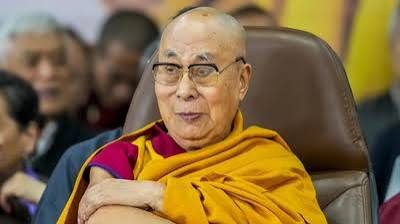
His Holiness is the longest remaining guest of India. China claiming to be a communist state and claiming not to be religious is meddling in the reincarnation of the 15th Dalai Lama.
They want to control the 15th Dalai Lama so that they can control the Tibetan narrative. And we as Tibetans and as citizens of the free world cannot allow that to happen.
Are you worried about the future of the Tibetan people after the 14th Dalai Lama?
I am concerned and worried, but at the same time I am a visionary. When I step back into my historical research, I know China will implode. It is scientifically impossible for China to control a nation through the barrel of a gun. According to Amnesty and Human Rights Watch there are around 100,000 protests in China every year.
China is very fragile inside that is why they have so much security. They don't allow international journalists to go to Tibet. Tibet is among the most tightly controlled and unfree nations of the world.
China exhibits progress through its roads, bridges, buildings, but the aspirations of the people of Tibet is to desperately see His Holiness.
China's biggest threat is not America, but this simple monk, the Dalai Lama.
As Tibetans, citizens of the free world and citizens of India, we have to continue telling that story.
I know for a fact that Tibet will be free. It was never a part of China. If you look at history there was a time when Genghis Khan ruled 3/4 of the world and those little kingdoms never thought they would be free from the Mongolians, but look at what happened.
Alexander conquered half the world. The Philippines was under Spain for 400 years. The Portuguese controlled so much of the world. The British ruled India for 200 years and said the sun would never set on the British empire, but it did.
Now there are Indians in the UK richer than the king. The unofficial food of England is butter chicken.
From the Sanatan Dharm perspective, it is karmic.
Tibetans have contributed to the social, economic and cultural fabric of Indian society. Momo has become more popular than samosa.