
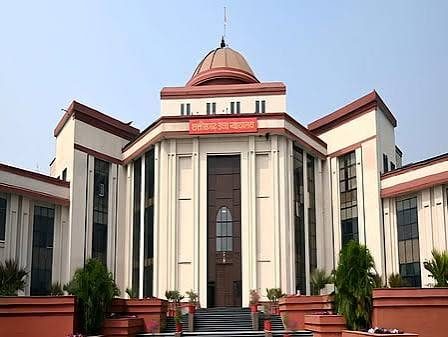
Chhattisgarh : A single-judge High Court Bench of Justice Narendra Kumar Vyas ruled that the trial court was justified in taking cognisance of the complaint filed by the mother-in-law and sister-in-law.
The High Court of Chhattisgarh has dismissed a criminal miscellaneous petition filed by a daughter-in-law and five of her family members seeking to quash proceedings initiated against them under the Protection of Women from Domestic Violence Act, 2005 (DV Act).
A single-judge High Court Bench of Justice Narendra Kumar Vyas ruled that the trial court was justified in taking cognisance of the complaint filed by the mother-in-law and sister-in-law, observing that disputes regarding whether the parties lived in a "shared household" or had a "domestic relationship" are matters of trial that require evidence.
The Bench stated that women themselves can be perpetrators or abettors under the Act and that mothers-in-law or sisters-in-law are entitled to seek legal remedies if subjected to domestic violence.
The dispute traces back to a complaint filed on November 11, 2020, under Section 12 of the DV Act by Nirmala Agnivanshi (mother-in-law) and Shruti (sister-in-law), residents of Raipur. According to the complainants, Anisha Agnivanshi married Nirmala’s son on February 24, 2011.
The complainants alleged that the husband’s father suffered from a severe kidney ailment and required care, but the daughter-in-law showed no willingness to look after him, causing marital strain. In an effort to resolve matters, the son moved his parents to Mumbai.
When he could not manage his father’s care alone due to work, he called his sister to assist—a move allegedly resented by the daughter-in-law, who engaged in rude behaviour and mistreatment. The family eventually returned to Raipur, but Anisha left the matrimonial home in May 2018.
The mother-in-law and sister-in-law further alleged that Anisha and her family members subjected them to verbal abuse, harassment, and threats of filing false dowry cases while pressuring her husband for a divorce, leading the complainants to seek relief and compensation under the DV Act.
The daughter-in-law, along with her mother, brothers, and sisters, moved the High Court under Section 528 of the BNSS, 2023.
They contended that they had never lived in a shared household with the complainants and argued that the mother-in-law and sister-in-law could not be termed "aggrieved persons" under Section 2(a) of the DV Act.
Dismissing the quashing petition, Justice Vyas observed that under Sections 2(a) and 3 of the DV Act, domestic violence includes not only physical abuse but also verbal and emotional abuse such as ridicule, insults, humiliation, and threats.
"Considering the well-settled position of law that the objection regarding aggrieved persons, shared household, and relationship is a matter of evidence which can be adjudicated or determined only after appreciating the material and evidence placed by the parties... these are defenses of the petitioners which cannot be considered by this Court at this stage,” the Court noted.