
Balaghat / Bhopal : Cockroach Janta Party founder Abhijeet Dipke has sparked debate by using a satirical 'resignation' letter to vehemently criticise the Mohan Yadav government's response to the tragic deaths of over 30 tribal children in Madhya Pradesh's Balaghat district, raising crucial questions about accountability and tribal welfare.
Abhijeet Dipke, Cockroach Janta Party founder, satirically 'resigned' as MP Chief Minister to protest over 30 tribal child deaths in Balaghat.
Dipke's letter criticised the Mohan Yadav government's handling of compensation and alleged failures in providing basic amenities like clean water, education, and tribal welfare.
The satirical protest highlighted issues such as tribal families relying on river water, dilapidated schools, and malnutrition among children in Balaghat.
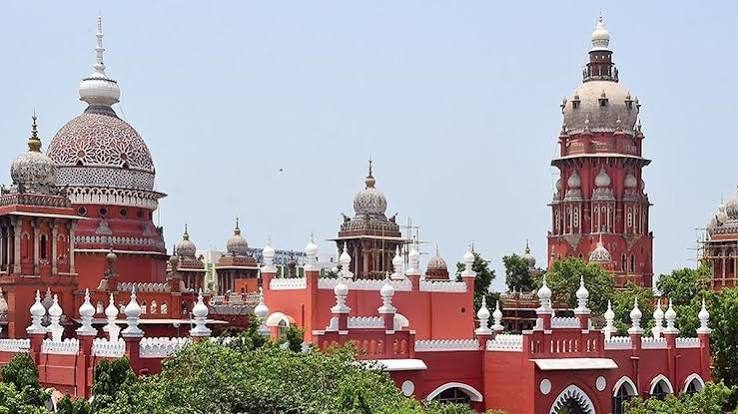
The Madhya Pradesh High Court has also intervened, seeking responses from state departments regarding the alleged deaths and inadequate healthcare facilities in Balaghat.
The protest underscores broader concerns about government accountability and the welfare of tribal communities in Madhya Pradesh.
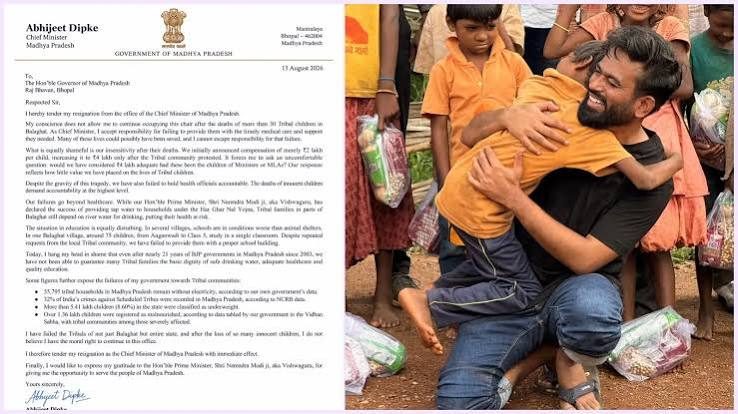
Cockroach Janta Party founder Abhijeet Dipke on Sunday resorted to satire to target the Mohan Yadav government over the deaths of tribal children in Balaghat district and posted a tongue-in-cheek letter on X about his 'resignation' as 'chief minister of Madhya Pradesh'.
The letter, addressed to MP Governor Mangubhai Patel and dated August 13, has Dipke stating that he was resigning as 'my conscience does not allow me to continue occupying this chair after the deaths of more than 30 tribal children in Balaghat'.
He also thanked Prime Minister Narendra Modi for giving him the 'opportunity to serve the people of MP', an opportunity he said he had 'clearly failed' to make the most of.
Satirical Critique Of Government Response
The satirical letter took aim at the government's handling of the Balaghat deaths, particularly the compensation announced for the victims' families.
Dipke also questioned if compensation of 'Rs 24 lakh' was adequate had these been the children of ministers or MLAs.
As per Balaghat additional collector DP Burman, kin of 24 deceased kids have been given Rs 4 lakh each, while the process is on to give aid to the others.
In the letter, Dipke said the deaths of innocent children 'demand accountability at the highest level'.
Exposing Systemic Failures In Tribal Areas
The post then widens its sweep, taking potshots at the government's claims on tap-water supply, education and tribal welfare. Dipke pointed out that some tribal families in Balaghat still depend on river water and alleged schools in several villages are in a condition worse than animal shelters.
He also cited government data on tribal households without electricity, crimes against Scheduled Tribes and malnutrition among children to underline what he called the failures of successive Bharatiya Janata Party governments in the state.
Concluding his mock resignation letter, Dipke said he had 'failed the tribals of not just Balaghat but the entire state' and, after the loss of so many innocent children, did not believe he had 'the moral right to continue in this office'.
High Court Intervenes In Balaghat Tragedy
The post came a day after Dipke's visit to disease-affected villages in Balaghat, where his interaction with families was disrupted by a confrontation with a group of social media influencers.
Earlier this week, the Jabalpur bench of the Madhya Pradesh high court sought a response from the state government over the deaths of more than 30 children allegedly due to infectious diseases in Balaghat district.
A division bench of Acting Chief Justice Vivek Rusia and Justice Pradeep Mittal issued notices to the state Health Department, Women and Child Development Department, Balaghat collector and others while hearing a public interest litigation.
The PIL alleged inadequate treatment for children and claimed that around 400 children were being treated at a hospital with a capacity of 50 beds.
It also alleged that yellow-coloured water was coming from handpumps in the affected areas and that children and women had not received nutritious food on time for several months.