
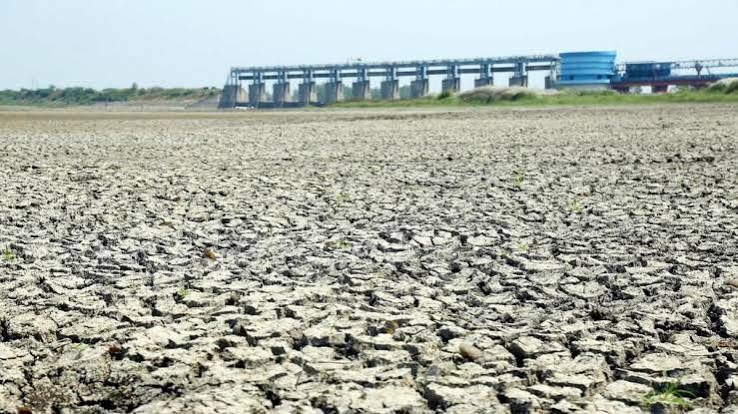
HYDERABAD: The state government on Tuesday declared 365 mandals in 31 districts drought-affected for Kharif-2026 and directed district collectors to initiate relief measures.
Of these, 111 mandals were classified as severely drought-affected and 254 as moderately drought-affected.
Nalgonda and Sangareddy (28 mandals each), Suryapet (23), Vikarabad and Adilabad (20 each), Nizamabad and Rangareddy (18 each), Yadadri and Khammam (17 each) and Bhadradri-Kothagudem (16) were among the worst-affected districts.
According to GO 3, issued by Chief Secretary Sanjay Jaju, the notification will remain valid for six months unless withdrawn earlier.
District collectors, along with the directors of Agriculture, Horticulture and Animal Husbandry and the Civil Supplies Corporation, have been directed to initiate relief measures, maintain registers of beneficiaries and expenditure, and submit regular progress reports to the Revenue (Disaster Management) department.
Mandals not included in the notification will continue to be monitored by the State Drought Monitoring Cell and may be added through a supplementary notification if conditions warrant, the GO said.
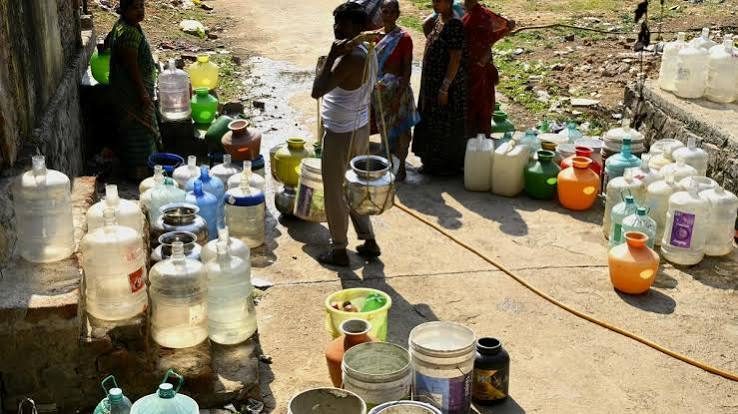
Relief measures will include input subsidies through Direct Benefit Transfer, augmentation of drinking water supplies, fodder arrangements and cattle camps where required, and employment generation under VB-G RAM G.
Collectors told to approach SLBC for agri loan rescheduling
Collectors have also been directed to approach the State Level Bankers’ Committee (SLBC) for restructuring agricultural credit and preventing coercive loan recovery, wherever permissible under Reserve Bank of India guidelines.
The Agriculture department must disburse input subsidies to affected farmers through DBT within one month of receiving Central assistance from the National Disaster Response Fund (NDRF). Beneficiary lists will be published on the websites of the respective district collectors and the state government.
The Planning department will prepare a memorandum for the Revenue (DM) department to forward to the Ministry of Agriculture and Farmers Welfare and the Ministry of Home Affairs, seeking NDRF assistance.
The GO said automated rainfall data from OTSDPS and DES telemetry for June 1 to September 30, 2026, along with dry-spell logs, were assessed under the mandatory Trigger 1 assessment.
The mandals were then evaluated against Trigger 2 impact indicators, using any three of four parameters: agriculture (crop-sown area shortfall, assessed by the Agriculture and Cooperation department), remote sensing (Vegetation Condition Index, TGRAC), soil moisture (Moisture Adequacy Index, PJTSAU) and hydrology (Groundwater Drought Index, Ground Water department).
The drought category was determined, as permitted by the manual, for mandals with more than 75% irrigated area. Ground-truthing surveys were conducted in 10% of villages in each mandal, with field verification findings serving as the final basis for determining drought intensity.
Proposals and ground-truthing survey reports submitted by district collectors, along with verified technical inputs and recommendations from the concerned departments, were scrutinised and placed before the Cabinet sub-committee.
The state received 615.5 mm of rainfall between June 1 and September 30, against the normal 740.6 mm, a deficit of 17%. Eighteen of the 33 districts recorded deficient rainfall.
The Kharif crop area fell from 139.28 lakh acres to 126.06 lakh acres, while the area under paddy declined by 18%, from 69.19 lakh acres to 57 lakh acres.
Live storage in major and medium reservoirs stood at 179.63 tmcft against a combined capacity of 585 tmcft, raising concerns over drinking water supplies, agriculture, livestock and power.
The Legislative Assembly had unanimously adopted a resolution on the rainfall deficit caused by El Niño on September 18, 2026.
It urged the Union government to send a Central team to assess the situation, sanction NDRF assistance and release its share of the State Disaster Response Fund (SDRF).
The resolution also sought support for crop-loss compensation, input subsidies, drinking water, fodder, groundwater and water-body restoration.
The state government also sought 50 additional days of employment under VB-G RAM G, with the Union government bearing the entire cost, increased fertiliser supplies, an additional 1,500 MW of power and a `20,000-crore special drought-relief package.
It further sought an increase in the Fiscal Responsibility and Budget Management (FRBM) borrowing limit from 3% to 3.5% of gross state domestic product (GSDP) for 2026-27, along with additional assistance under Central and Centrally Sponsored Schemes with relaxed norms.