

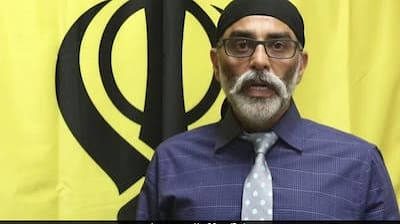
New Delhi : Delhi Police have apprehended three individuals from Punjab for allegedly defacing public spaces with pro-Khalistan and anti-BRICS slogans near the Singhu border, a plot reportedly masterminded by designated terrorist Gurpatwant Singh Pannun of the banned Sikhs for Justice (SFJ).
Three individuals, Preetpal, Harminder Singh, and Niranjan, were arrested in Punjab for painting pro-Khalistan and anti-BRICS graffiti near Delhi's Singhu border.
The act was allegedly orchestrated by designated terrorist Gurpatpat Singh Pannun, head of the banned Sikhs for Justice (SFJ) organisation.
Accused Preetpal, identified as SFJ's operational head in India, was previously arrested for similar pro-Khalistan graffiti ahead of the G20 Summit in 2023.
Police are investigating potential foreign funding via hawala channels and links to Pakistan-based terror operatives in connection with the SFJ activities.
The Ministry of Home Affairs banned SFJ under UAPA in 2019, extending the ban in July 2024 due to its subversive activities and threats to India's security.
Three men have been arrested from Punjab for allegedly painting pro-Khalistan and objectionable slogans, including anti-BRICS graffiti, near the Singhu border in New Delhi at the behest of designated terrorist Gurpatwant Singh Pannun, police said on Saturday.
Police suspect the involvement of the banned Sikhs for Justice (SFJ) in the incident.
The accused have been identified as 31-year-old Preetpal, Harminder Singh and Niranjan.
Their movements were traced through CCTV footage from the Singhu border area and other locations, following which they were arrested from Punjab, they said.
SFJ's Operational Head Arrested
According to police sources, the graffiti was painted on September 6 in Alipur, on the outskirts of Delhi, at the behest of the US-based secessionist organisation SFJ and its chief Pannun.
The sources said Preetpal was out on bail and had been operating as the SFJ's operational head in India.
He was earlier arrested by the Delhi Police Special Cell in 2023 for allegedly painting similar pro-Khalistan graffiti at multiple locations in the national capital ahead of the G20 Summit.
In the 2023 case, Preetpal and another accused, Rajvinder Singh, were arrested for allegedly painting slogans including 'Delhi Banega Khalistan' and 'Khalistan Zindabad' on walls at several locations, including Shivaji Park, Madipur, Paschim Vihar, Udyog Nagar and the Maharaja Surajmal Stadium Metro station, the sources said.
He had earlier faced multiple cases in Punjab and Haryana related to SFJ activities. He was released on bail earlier this year and allegedly continued to manage the organisation's activities while out on bail, they added.
According to the sources, Preetpal came in contact with foreign handlers through social media messages and calls in 2018 and was subsequently drawn into SFJ activities.
The graffiti included anti-BRICS and pro-Khalistan slogans, they said.
Probing Terror Links and Funding
Pannun, the chief of the banned SFJ, had also claimed responsibility for the incident in a post on X, according to police sources.
Investigators are also probing whether he was in contact with terror operatives based in Pakistan, the sources said.
Police are examining the accused's communication and financial links as part of the probe.
The sources said investigators suspect that Preetpal may have received foreign funds through hawala channels and are probing whether such funds were used for carrying out pro-Khalistan activities.
The sources also said Preetpal allegedly recruited Harminder Singh and Niranjan and offered them money to paint the graffiti.
Ongoing Investigation and UAPA Charges
The three accused are being questioned by teams of the Special Cell and Intelligence Bureau, the police said.
The car allegedly used in carrying out the graffiti has also been recovered.
A case under the Unlawful Activities (Prevention) Act is already registered against Preetpal, the sources said.
The Ministry of Home Affairs had banned SFJ under the UAPA in 2019.
The ban was extended for five years in July 2024, with the government citing the organisation's alleged involvement in subversive activities, links with militant outfits and activities prejudicial to India's internal security, sovereignty and territorial integrity.
Police are conducting further investigation to establish the complete network behind the graffiti, trace financial and communication links and identify others involved in the case.